

Parent Hub · Tummy time and awake time
Tummy time by age: a 0 to 6 month chart, and what to do if your baby hates it
Start tummy time from birth with 1 to 2 minutes at a time, and build up to 10 to 15 minutes at least three times a day by about 4 months. Australian guidelines recommend at least 30 minutes a day in total, spread across the day while your baby is awake. If your baby hates it, start on your chest instead of the floor.


The short version
Key takeaways
-
1
Tummy time is safe from birth, as long as your baby is awake and someone is watching.
When to start -
2
Start with 1 to 2 minutes a few times a day. Build up to 10 to 15 minutes at least three times a day by about 4 months.
The chart by age -
3
Aim for at least 30 minutes a day in total, spread across the day.
How much tummy time -
4
Crying on the tummy is normal at first. Your chest and your lap both count, and a rolled towel under the chest helps.
If your baby hates it -
5
Tummy time alone isn't enough for a flat spot that's already showing. Even with every waking minute off the back of the head, a baby under 3 months still sleeps 14 to 17 hours a day on their back.
If there's already a flat spot
If your baby cries the moment they're on their tummy, you're not doing it wrong. Young babies have heavy heads, and tummy time is hard work for them.2 It does get easier, and it's worth sticking with: tummy time builds head, neck and upper body strength,3 and it helps protect your baby's head shape.2 Here's how much to aim for at each age, what you'll see as it gets easier, and what to try when your baby hates it.
How much tummy time does a baby need?
At least 30 minutes a day, spread across the day while your baby is awake. That's the Australian guideline for babies who aren't yet moving around on their own.1 It doesn't happen in one go. The Royal Children's Hospital Melbourne suggests starting with 1 to 2 minutes at a time, then building up to 10 to 15 minutes at least three times a day by around 4 months.2
The minutes add up faster than you'd think, because tummy time doesn't have to happen on the floor. Tummy-down on your chest counts, and so does across your lap or over your arm.2
Tummy time by age: a 0 to 6 month chart
Many babies build up to 10 to 15 minutes at a time somewhere between 2 and 4 months.25 Use the chart as a guide, not a test: every baby builds up at their own pace, and some days go better than others.
| Age | Each time | Through the day | What you might see |
|---|---|---|---|
| Birth to 6 weeks | 1 to 2 minutes at a time | A few short goes on your chest or the floor, after nappy changes and naps | Crying is normal at first. Lifting their head is hard work |
| 6 weeks to 3 months | Building up to 10 to 15 minutes | Several goes, working towards 30 minutes in total | Holds their head up on their tummy, by about 2 months |
| 3 to 4 months | 10 to 15 minutes | At least three times a day | Pushes up onto their elbows or forearms, by about 4 months |
| 4 to 6 months | 10 to 15 minutes or more | At least 30 minutes a day, until they're crawling | Pushes up on straight arms and rolls from tummy to back, by about 6 months |
The milestones are things at least 3 in 4 babies can do by that age.
The Royal Children's Hospital Melbourne 2, Red Nose Australia 5, Australian guidelines 1, CDC milestones 67
When should I start tummy time with my newborn?
From birth. The Royal Children's Hospital says tummy time can safely start from birth,2 and Red Nose Australia agrees, as long as your baby is awake, not too tired and watched by an adult.4 In the first weeks, the easiest place to start is on you.
-
1
Pick your moment
Awake and settled, after a nappy change or a nap, and not straight after a feed.
-
2
Start on your chest
Recline in a chair or lie back on the floor with your baby tummy-down on your chest, so they lift their head to see your face.
-
3
Move to the floor
A play mat on the floor, with you down at their eye level.
-
4
Keep it short
1 to 2 minutes is plenty at first. Roll them onto their back for a break before they get upset, then try again later.
-
5
Stay with them
Never leave your baby on their tummy alone. If either of you gets sleepy, put your baby on their back in their own safe sleep space.
What should I do if my baby hates tummy time?
Start somewhere easier than the floor, keep each go short, and do it often. It's normal for young babies to be unhappy on their tummy: their heads are heavy, and lifting them is hard work.2 Babies born early, and babies with bigger heads, often find it harder still.2 These all help:
- Use your body: chest to chest, across your lap and tummy-down over your arm all count as tummy time.2
- Roll up a towel: a small rolled towel under the chest, with the arms forward, takes some of the load.2 Only use it while your baby is awake and you're watching.5
- Lend a hand: gently pressing down on your baby's bottom makes it easier for them to lift their head.2
- Get down to their level: babies love watching your face, so lie down in front of them.5
- Give them something to look at: a baby-safe mirror or a rattle in front of them works well.23
- Pick the time: after a nappy change, bath or nap, and not straight after a feed.25 With reflux, leave 20 to 30 minutes after a feed, and keep going with tummy time.2
- Stop before the tears: when your baby gets tired, roll them onto their back for a break and try again later.8 Little and often adds up.

If your baby still isn't getting better at tummy time after 6 to 8 weeks of age, or keeps bringing up milk on their tummy, see your GP or child and family health nurse.28 If they always turn their head the same way when lying on their back, the Royal Children's Hospital suggests seeing a children's physiotherapist, your nurse or a doctor.9 A favourite side often means a tight neck, and a paediatric physio can help with that.9 Our guide to why babies always turn their head to one side covers the signs.
Does tummy time help with flat spots?
Yes. In a review of 16 studies with 4,237 babies, tummy time was linked with better motor development and with preventing a flat back of the head (brachycephaly). The link with a flat spot on one side was less clear.10 In a New Zealand study, babies with a flat spot were more likely to have had less than 5 minutes of tummy time a day in their first 6 weeks.11 A Dutch study of babies at 7 weeks found the same pattern: tummy time fewer than three times a day was one of eight factors linked with flattening.12 If the flattening is right across the back of the head, our guide to brachycephaly covers what helps most, and when.
Is tummy time enough if my baby already has a flat spot?
No, not on its own. Tummy time takes the pressure off the back of the head while your baby is on their tummy. But most of your baby's day is spent asleep, on their back, with the weight on the back of the head.
Back sleeping is right for every baby, and babies sleep a lot: 14 to 17 hours a day at 0 to 3 months, and 12 to 16 hours at 4 to 11 months, including naps.1 Even with every waking minute off the back of the head, a baby under 3 months still spends 14 to 17 hours a day lying on it. That's more than half of every day.
In real life, the waking hours aren't all pressure-free either. The guideline is at least 30 minutes of tummy time a day,1 which leaves 6.5 to 9.5 waking hours for a baby under 3 months. Plenty of those are spent lying back as well: in the capsule, the bouncer, the pram or on the play mat.
AsleepAwakeTummy time
Sleep is the low end of the 14 to 17 hours a day recommended at 0 to 3 months, including naps. Tummy time is the guideline minimum, and it's part of the awake hours.
Australian 24-Hour Movement Guidelines 1
Even with every waking minute off the back of the head, a baby under 3 months still spends 14 to 17 hours a day lying on it.
That's why a flat spot that's already showing needs more than tummy time. Flat spots usually get more obvious until about 4 months,13 so if you can see one now, don't wait to see whether tummy time sorts it out. Keep tummy time going for strength and for the neck, book a paediatric physio, especially if there's a favourite side, and take the pressure off the flat spot where your baby spends the most hours: in the cot.
That's what the Perfect Noggin is for.

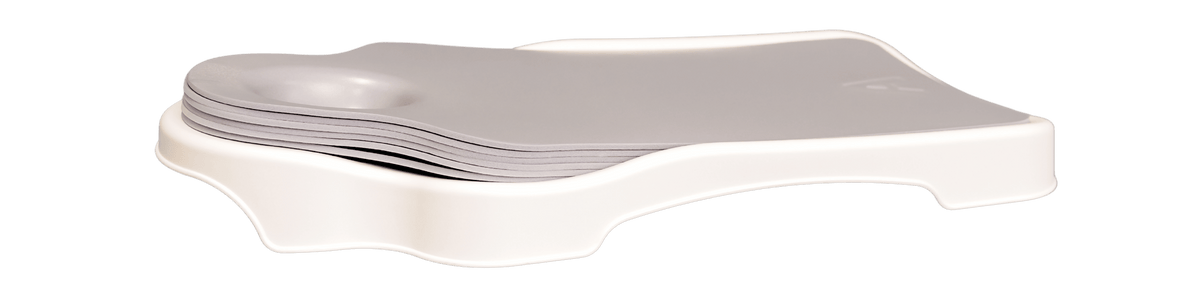
The Perfect Noggin is a contoured head shaping surface designed by paediatric craniofacial surgeon Dr Gary Rogers. It's shaped with a recessed cup for the back of the head, which takes the weight off the flat spot, so your baby's head naturally grows back into that space. It works whichever way your baby turns, with no repositioning, so it doesn't fight a favourite side. Your physio works on the neck. The Perfect Noggin keeps working overnight and through day sleeps.
Safety comes first in the design. It's firm and near flat, with no loose parts and nothing strapped in, so your baby is free to move their head. A version designed for premature babies was found feasible and safe in a hospital study, with no device-related adverse events reported.14 Once your baby starts rolling from back to tummy, or reaches an adjusted age of 6 months, use it supervised only (watching on a video monitor counts), and stop once they're rolling regularly. It isn't suitable for babies with craniosynostosis. If your baby has severe reflux, breathing or heart problems, or bone or joint abnormalities, check with your paediatrician first.
Most parents see a visible difference within 6 to 8 weeks of consistent use. Results vary. Count back from rolling and the maths is simple: most babies start rolling between 4 and 6 months, so every week of waiting is a week less of use. For babies 1 to 3 months, the 12-week hire ($360, about $30 a week) covers the weeks that count most. For babies 4 to 6 months, the 6-week hire ($270) takes a 4-month-old to about 5.5 months, and you can extend in 2 or 4-week blocks if you need longer. Both include free delivery and return in Australia. Or buy new for $450 and it's yours to keep.

Suitability check
Check if Perfect Noggin is right for your baby
5 quick questions, about 30 seconds. We’ll tell you if it suits your baby and how to give them the best start.
We ask about
- Your baby’s age
- Rolling
- A quick safety check
- Head shape
- Turning to one side
General information, not a clinical assessment.
 Next read
What can I do at home for my baby's flat head?The positioning changes and everyday habits that take pressure off a flat spot while your baby is awake.
Frequently asked questions
How much tummy time should a 2 month old have?
Many babies build up to 10 to 15 minutes at a time somewhere between 2 and 4 months. The Australian guidelines recommend at least 30 minutes a day in total, so spread it across several short goes rather than one long one.
How much tummy time does a 3 month old need?
At least 30 minutes a day in total. The Royal Children's Hospital Melbourne suggests working towards 10 to 15 minutes, at least three times a day, by around 4 months. If your baby still finds it hard at this age, try it on your chest or over a rolled towel.
Does tummy time on my chest count?
Yes. Chest to chest is one of the tummy time positions the Royal Children's Hospital Melbourne recommends, and it's often the easiest way to start with a newborn. Stay awake and alert, and if either of you starts getting sleepy, put your baby on their back in their own safe sleep space.
Should I do tummy time after a feed?
Not straight after. Wait a while after a feed so your baby is less likely to bring milk up. If your baby has reflux, the Royal Children's Hospital Melbourne suggests leaving 20 to 30 minutes after a feed, and says you can and should keep going with tummy time.
What if my baby falls asleep during tummy time?
Gently roll them onto their back and put them in their own safe sleep space. Tummy time is only for when your baby is awake and someone is watching, and babies should always sleep on their back.
Sources and references
The numbers in the text link to these sources, so you can check them for yourself.
-
1
Australian Government. Physical activity and exercise guidelines for infants, toddlers and preschoolers (birth to 5 years), from the Australian 24-Hour Movement Guidelines for the Early Years. View source (opens in a new tab)
-
2
The Royal Children's Hospital Melbourne. Tummy time for your baby. Kids Health Info, reviewed December 2020, updated July 2025. View source (opens in a new tab)
-
3
Raising Children Network. Tummy time for babies: in pictures. View source (opens in a new tab)
-
4
Red Nose Australia. Can babies be placed on their tummy to play? Updated November 2025. View source (opens in a new tab)
-
5
Red Nose Australia. Tummy time is good for me because… (brochure). View source (opens in a new tab)
-
6
Centers for Disease Control and Prevention. Learn the Signs. Act Early: milestones by 2, 4 and 6 months. View source (opens in a new tab)
-
7
Zubler JM, et al. Evidence-informed milestones for developmental surveillance tools. Pediatrics, 2022. View source (opens in a new tab)
-
8
Raising Children Network. Play ideas for baby physical activity. View source (opens in a new tab)
-
9
The Royal Children's Hospital Melbourne. Plagiocephaly and brachycephaly: misshapen head. Kids Health Info, reviewed September 2024, updated July 2025. View source (opens in a new tab)
-
10
Hewitt L, Kerr E, Stanley RM, Okely AD. Tummy time and infant health outcomes: a systematic review. Pediatrics, 2020. View source (opens in a new tab)
-
11
Hutchison BL, Thompson JM, Mitchell EA. Determinants of nonsynostotic plagiocephaly: a case-control study. Pediatrics, 2003. View source (opens in a new tab)
-
12
van Vlimmeren LA, et al. Risk factors for deformational plagiocephaly at birth and at 7 weeks of age: a prospective cohort study. Pediatrics, 2007. View source (opens in a new tab)
-
13
Hutchison BL, Hutchison LA, Thompson JM, Mitchell EA. Plagiocephaly and brachycephaly in the first two years of life: a prospective cohort study. Pediatrics, 2004. View source (opens in a new tab)
-
14
Knorr A, et al. Feasibility and safety of the Preemie Orthotic Device to manage deformational plagiocephaly in extremely low birth weight infants. Advances in Neonatal Care, 2019. View source (opens in a new tab)
About this guide
How this guide was written
Based on published research
Each guide draws on peer-reviewed studies, including Dr Rogers’ own published work on flat head.
Sources on every guide
Every guide lists its references at the end, so you can read them for yourself.
Clearly dated
The date at the top shows when this guide was last updated.
Information, not a diagnosis
A guide can’t assess your baby. Your GP, child health nurse or a paediatric physiotherapist can.
Written by

Joel and Vanessa Hope
Perfect Noggin Australia
We’re Brisbane parents who went through a flat spot with our own daughter. We wrote this guide from published research, and every source is listed above.
The research it draws on

Dr Gary Rogers
Paediatric craniofacial surgeon
Dr Rogers didn’t write this guide. It draws on his published research on flat head. He also designed the Perfect Noggin, so we say so here. Meet Dr Gary
Spotted something out of date? Email support@theperfectnoggin.com.au
The Perfect Noggin
Ready to take the pressure off?
Designed by paediatric craniofacial surgeon Dr Gary Rogers. It takes the pressure off the flat spot so growth can go back into it, alongside your physio’s work on the neck.
- Nothing straps or holds your baby
- Four foam layers that grow with them
- From birth until your baby starts rolling
Hire
From $30 a week
6 or 12 weeks. Free delivery and return in Australia.
Buy new
Yours to keep
Keep it for a future baby. Free standard delivery in Australia and NZ.
The window
The earlier you start, the more head growth is still to come.
Keep reading
More from the Parent Hub
 Practical steps at home
What can I do at home for my baby's flat head?The positioning changes and tummy time that take pressure off the flat spot, and why we do not publish stretches.
 Flat across the back
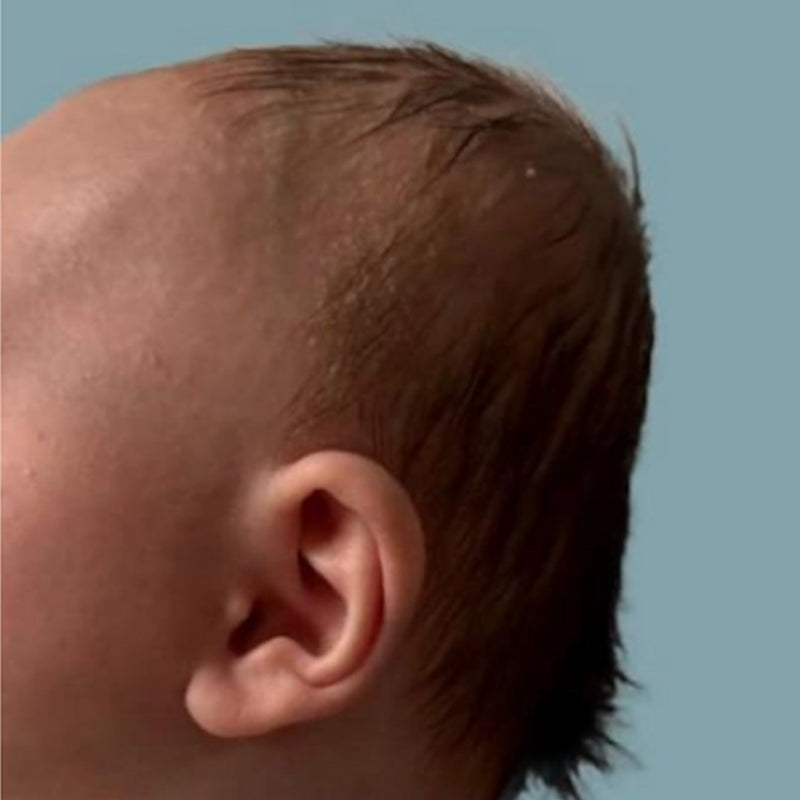
Brachycephaly in babies: 4 things that help a flat back of the head before 6 monthsA flat area right across the back of the head. What it looks like, why it happens, and the 4 things that help most, starting early.
 The neck behind the flat spot
Why does my baby always turn their head to one side?The earliest sign is a head turning preference, not a tilt. What to look for and when to ask for a physiotherapy referral.
You’re in step 3 of 4
- 1Is it a flat spot?
- 2Why it happens
- 3What you can do now
- 4Your options